Winter driving: tips for novice drivers in Estonia
Winter driving
Slippery driving
Winter in Estonia is beautiful — and capricious. One day there will be a thaw near zero, the next -15° C, icy wind and a stuffy road. If you're a new driver (or haven't driven in winter for a long time), then this article is for you: we'll put together a simple, humane “helper” that will keep you and others safe and make winter driving significantly calmer. And if you feel that you would like a firmer hand and more practical tricks in winter traffic, we will also talk at the end about how in Skydriving School you can quickly hone this skill.
1) Estonian conditions and rules — what shallknow
Winter tires:In Estonia, winter tires are mandatory during the winter period. In practice, this means that when cold and slippery conditions arrive, you should be under winter tireswith a pattern depth of at least 3 mm(recommended 4—5 mm).
Stud tires vs flat tires:
Studded tireshook up very well on ice, are ideal in rural areas and in case of danger of black ice.
All-season tires (studless winter tires)are quieter, save on road surfaces, perform well in the city and on wet/dry cold asphalt. The choice depends on your routes: if you drive a lot on icy side roads — rather a plateau; if mostly in the city — a lamella.
Daytime white lights:In Estonia they must lights are always on, also during the day. In winter, visibility is unstable — keep yourself and others visible.
Car cleaning:Before the ride remove snowfrom the roof, from the hood, from the lights and especially from glasses(front, sides, back). The “snow cap” left on the roof can fall on the windshield when braking - hello, dark moment.
Note:Exact requirements (dates, permitted periods, pattern depths, light rules) are updated from time to time. It is wise to take a look at the Transport Authority page or the newsletter of your driving school before winter and keep up to date.
2) Prepare for winter: technical “hygiene” of the car
A little preparation will save you a big mess later.
Batteries and start-up:The cold reduces the capacity of the battery. If the battery is old, check its condition. Hoya starter cablesin the car and know how to use them safely.
Glass washing liquid:Choose a winter mix —25... —30 °C, otherwise the sprayer will freeze. Change the chambermaids if they leave streaks.
Coolant:Check frost resistance. An accidental “water on top” solution can end with a cold... badly.
Tire pressure:With a cold, the pressure drops. Too low pressure prolongs the braking distance and increases the cost. Check once a month.
Locks and seals:Hoya lock defrosting agentin the pocket (not in the trunk!). Handle door seals with siliconeso that the doors do not freeze.
Trunk “winter set”:snow and ice scraper, small snowplow, work gloves, flashlight, warm clothes/blanket, grip mat, first aid, phone charger.
Fuel/diesel/electricity:
Diesel:use winter dieselto avoid “waxing”.
Petrol:keep the tank at least half full— the condensate “does not like” the fuel system.
Electric car (EV):must be taken into account 20— 40%with a shorter driving range. Preheatcar and battery (from the app), keep while driving cabin heat more modest, use Seat heating— comfortable and economical. With a cold, you can regen brakingbe limited - plan the brakes longer in advance.
3) Winter guidelines: the three golden rules
Slower. I'm smoothing. Longer distance. These three words do 90% of the work.
Speed:On a slippery road, do not slow down. Better braking 10 meters earlier than 10 meters too late.
Smoothness:Strong commands (steep gas, abrupt brake) = glide. All movements soft and gradual.
Longer longitudinal gap:Make room for yourself. 3-5 secondsA “airbag” with a front passenger is normal in winter, not an exaggeration.
Starts and Acceleration
Front-wheel drive/automatic:start gently, let traction control(TCS) to do its job.
Manual:start if necessary with the second gear— less torque = less wheel emptying.
Braking
Car with ABS:press brake Consistently and firmly, driver direction steering wheel(you have controllability, even if the pedal “rumbles” under it).
Without ABS (rare):pumpbrake (cadence braking).
Down the hill:prepare engine braking(L/B mode on automatic, lower gear on manual) so that the brakes have less work.
Turnaround
Decrease the speed beforecurve, not bend.
If undercontrollability(car sinks straight out): take gently turn off the gas, do not slip over the steering wheel.
If top manageability(rear end runs): see where you want to go, turn gently counterclockwiseyes press the clutch down(manual) or keep the gas uniform (automatic).
Circulationyes intersections: they are the most slippery. Take it easy, do not rush to the second lane “at the last moment”.
4) Black ice — Estonian “winter boss”
Black ice(or invisible ice) occurs in particular:
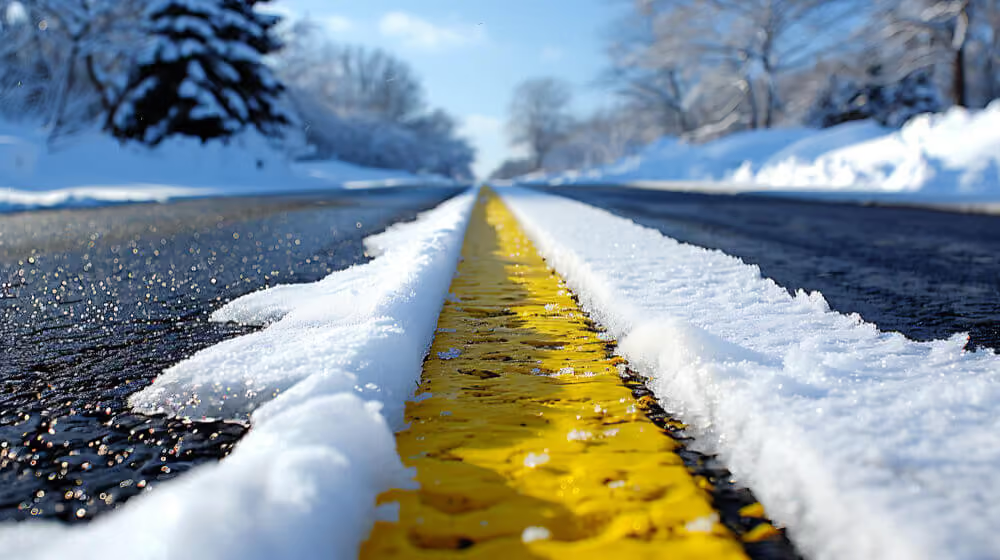
on bridges, viaducts, forest ridge(in the shade of the wind), near the water(fog/humidity), late at nightyes early in the morningafter the melt. Signs: on the road wet gloss, but thermometer around or below zero. The steering wheel becomes “lighter”. If in doubt, expect to be slippery: do not make sudden movementsand keep the pace under.
5) City vs highway: a different “playing field”
In the cityThe greatest dangers are: intersections, Crossing points, parking lots(to the mirror), tram and bus gardens(polished rails), white snow shadow(hides curbs and islets).
Highway: the greatest danger is wrong speedyes wind pocketsemerging drift. If it wheezes, hold low beam instead of high beam— snow reflects, visibility may drop to zero. Do not use cruise controlslippery.
Highs/Declines: hold Impulsebefore the ascent (do not stop), when descending, use engine braking.
6) When you get stuck: the ABC of “swinging out”
Happens to the best ones, too.
Wheels for straightening, switch traction controltemporarily if necessary out(sometimes it “kills” the movement).
Snow away from the wheels— shovel, legs, whatever works.
Kigutaforward (D—R, manual 1.—R) gently, do not “burn” tires.
Put something down:rubber mats, old carpet, cat litter, fine gravel.
If you don't move — do not misscar on the road “at an angle”: danger triangle, reflector, help.
7) Visibility and “breathing” salon
Glass fog:switch air conditioning(yes, even in winter!) and blowing on glasses. Moisture is what makes the fog.
Rear window heatingyes mirror heating— best friends.
Washing the lights:keep the lights clean; LEDs are nice, but when they're under the snow, no one will see you.
Clothing:rather drive in winter Layered. Thick “ski pants” impede the steering feel and the operation of the seat belt.
8) “Four-wheel drive will save?” - not really
4×4helps on accelerationyes Permeability(for example, with fresh snow). But on brakingyes Curvenot much help from that - the four sliding wheels are still... sliding wheels. Tyreson the most important. Good winter tireis worth more than a “cool all-wheel drive” with a worn lamella.
9) Common mistakes to avoid in winter
Panic brakingin the middle of the bend. Slow down beforecurves.
Cruise controlslippery. Leave it on the spring coat.
Pinching the phone. In winter, the margins are smaller — keep your eyes on the road.
“I know I'll get there” overtaking.Visibility + slippery = very bad combo.
“Food is given by traces” tanning.Snowy squares hide surprises. Take it easy, use cameras/sensors, but don't trust them blindly.
10) Parking and standing in the cold
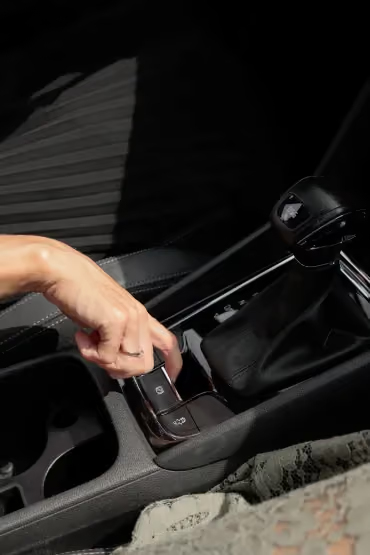
Handbrake:With severe frostbite, you can freeze.
Leave the gear on the manual 1.or R.
On the automatic machine P; if you use the parking brake, do it gently.
Parking place:choose if possible flata place from which it is easy drive out(for example, nose outward).
Doors/windows:before opening knuckleStay tuned — the glass will thank you.
11) A little deeper than the tires (in simple language)
Teeplaan: kas on musta jää oht, kas vajad rohkem aega.
Meelerahu: aeglasem, sujuvam, pikem vahemaa.
14) KKK: lühivastused ebamugavatele küsimustele
Kas naastrehv on alati parem? Ei. Jääl jah, linnas ja märjal asfaldil võib lamell olla parem ja vaiksem. Mõtle oma marsruutidele.
Kas nelikvedu tähendab lühemat pidurdust? Ei. Pidurdust määravad rehvid ja teeolud, mitte vedavate rataste arv.
Kas püsikiirusehoidja sobib talvel? Üldiselt ei – libedaga võib see gaasi valesti ajastada. Hoia kontroll enda käes.
Kas kässariga driftida on okei? Ei. Õppekeskuses, kontrollitud oludes – miks mitte. Liikluses – suur ei.
15) Inimsõbralik tõde talvisest sõidust
Talv “karistab” järske liigutusi ja premeerib rahulikku, ettenägelikku sõitu. Mõtle ette kaks sammu, hoia varu ja ära lase “küll jõuan” mõttel pead segi ajada. Kui hing läheb kiireks, hinga sõna otseses mõttes sügavalt – see teeb rooli taga imesid.
Soovid talvesõidus päriselt kindlust juurde?
Tule Skyautokooli lõppastme koolitusele (talvine fookus)
Meie lõppastme koolitus on praktiline treening, kus:
harjutad instruktori juhendamisel libedal pidurdust, takistuse vältimist, kurvitehnikat ja sõidurütmi;
saad personaalse tagasiside oma sõiduvõtete kohta;
testid erinevate rehvide ja abisüsteemide käitumist turvalises keskkonnas.
See on mitte-teooria, vaid päris kogemus, mis jääb kätele ja jalgadele meelde – just see, mida talvel vaja. Küsi järgmise grupi aegu ja kohtade saadavust: Skyautokool (Mustamäe, Kesklinn, Lasnamäe) – ja teeme sinust talvesõidu mõttes “külmaverelise” juhi.

.avif)
