
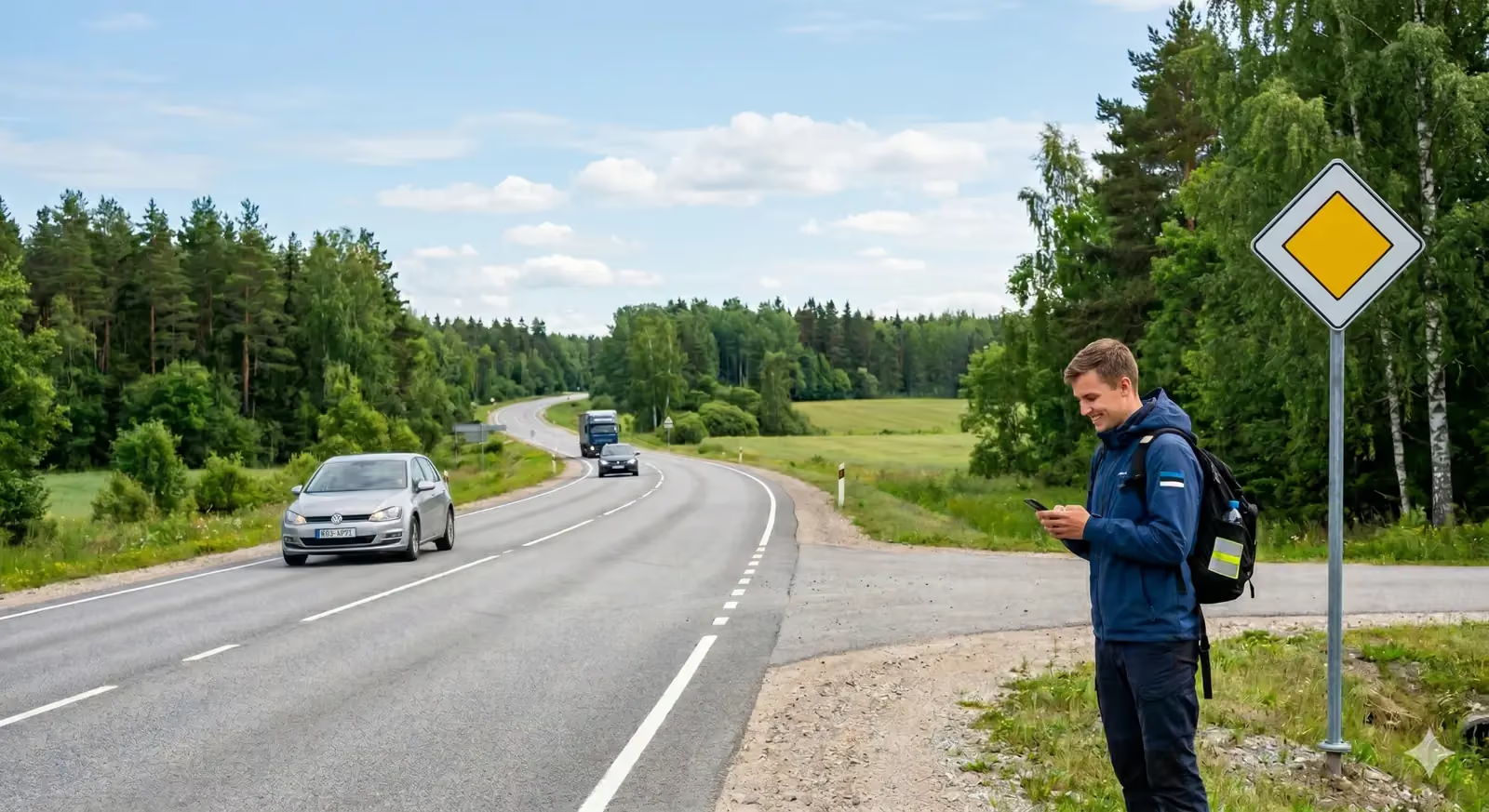
Traffic signs are the foundation of the language of the road. Without knowing them, it's impossible to pass the theory exam or participate safely in traffic. On Estonian roads, more than eight different sign groups are used - and each sign has a precise meaning that every driver must know.
In this guide, we explain all the main traffic signs, from warning signs to priority and information signs, share practical tips for preparing for the exam, and point out the most common mistakes beginners make related to signs. This guide brings together the meanings of traffic signs and is suitable for those searching for information under the keyword traffic signs in Estonia.
A traffic sign is a standardized symbol that provides the driver with information about road conditions, applicable rules, or hazards. In Estonia, the use of traffic signs is regulated by the Traffic Act, and more detailed requirements are set out in the regulation "Meanings of traffic signs and road markings and requirements for traffic lights."
Knowing traffic signs is mandatory for every driver - ignoring them results in a fine of 10-300 penalty units, and more serious violations may lead to the suspension of your driving licence.
Traffic signs used on Estonian roads are divided into eight groups. Let's look at each one more closely.
Warning signs alert the driver to an upcoming danger. They are installed before the hazardous location so the driver has time to adjust speed to the conditions.
Characteristics: triangular shape, red border, white background.
Common warning signs:
Practical tip: a warning sign does not automatically mean you must stop - it means you must assess the situation and reduce speed if needed.
Priority signs determine who has the right of way at an intersection or a narrow section of road.
Common signs:
Most common exam mistake: many beginners do not stop fully at a STOP sign - slowing down is not enough; the car must come to a complete standstill.
These signs establish prohibitions or restrictions and must be followed.
Characteristics: circular shape, red border.
Common ones:
Important to know: Prohibitory and restriction signs apply only to the road on which they are installed – not to the entire area.
Mandatory signs show what the driver must do - not what they must not do.
Characteristics: circular shape, blue background, white symbol.
Common ones:
Information signs provide useful information about the road and facilities.
Characteristics: rectangular, blue or green background.
Common ones:
Direction signs indicate directions, road connections, and distances.
These signs show the location of roadside services - fuel station, rest area, ATM, tourist information, etc.
Supplementary plates clarify or limit the meaning of the main sign - for example, they indicate the time when a restriction applies or the type of vehicle the sign concerns.
In the theory exam, questions related to traffic signs form an important part of the test. Here are the topics that most often cause confusion:
Mistake 1: Ignoring a sign because the road seems empty: a traffic sign always applies - regardless of whether other road users are present.
Mistake 2: Misunderstanding how long a speed limit applies: a speed limit applies from the sign onward until a new sign or the end of the built-up area.
Mistake 3: Confusing no parking with no stopping: no parking allows brief stopping to drop off passengers. No stopping prohibits any stopping at all.
Mistake 4: Ignoring supplementary plates: for example, if a prohibitory sign has a plate "7:00-19:00," the restriction applies only during those hours.
Mistake 5: Ignoring temporary signs: orange and yellow temporary signs (e.g., in roadworks) take priority over permanent signs.
How many different traffic signs are there in Estonia?
There are officially over 200 different traffic signs on Estonian roads, divided into 8 main groups.
Is knowing traffic signs mandatory for the theory exam?
Yes. Questions about traffic signs make up an important part of the theory exam, and not knowing them is one of the main reasons people fail.
What happens if I ignore a traffic sign?
Depending on the violation, the fine can be 10-300 penalty units. For serious violations (e.g., ignoring a no-entry sign), driving rights may be restricted.
Are temporary traffic signs equal to permanent ones?
Temporary signs (orange or yellow background) take priority over permanent signs - during roadworks you must follow temporary signs.
Where can I find the official list of all Estonian traffic signs?
The complete list is available in the State Gazette in the regulation "Meanings of traffic signs and road markings and requirements for traffic lights."
Which signs are the hardest on the exam?
The most mistakes occur with priority signs, no parking/no stopping, and temporary signs.
Traffic signs are not just theory-exam material - they are the everyday language of traffic that every driver must master. If you know the signs well, you'll drive more confidently, make fewer mistakes, and avoid fines.
Preparing for the theory exam or driving test? Sky Driving School helps you reach your licence step by step - we teach in Estonian, Russian, and English all across Estonia, including Tallinn, Lasnamäe, Mustamäe, Kesklinn, and Viimsi.
.avif)
.avif)
.avif)