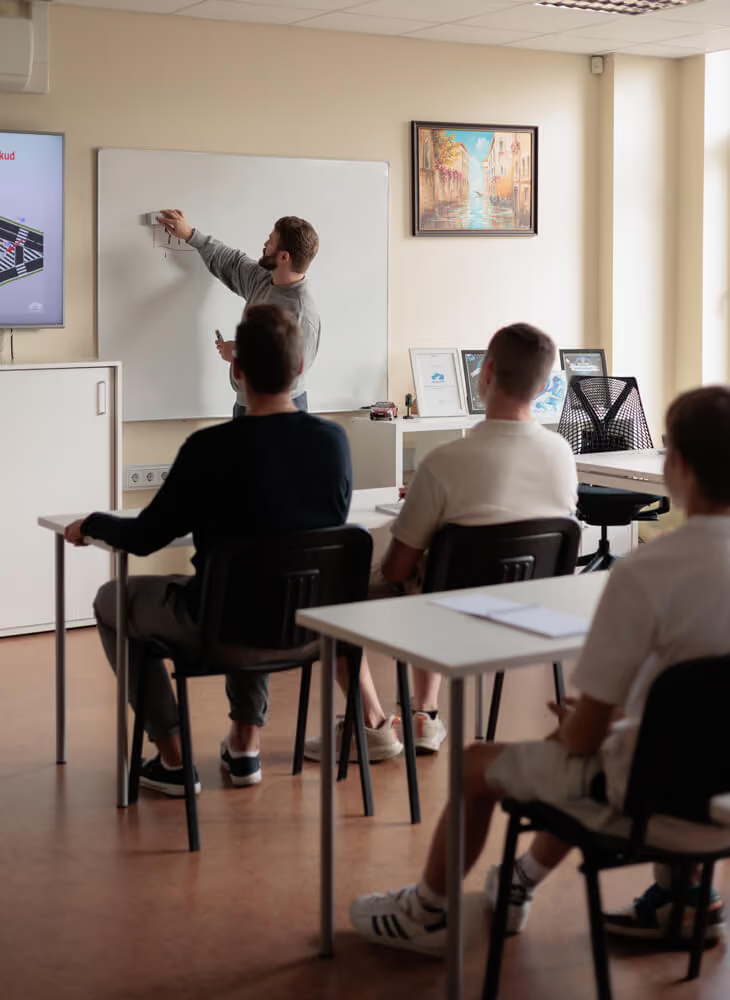
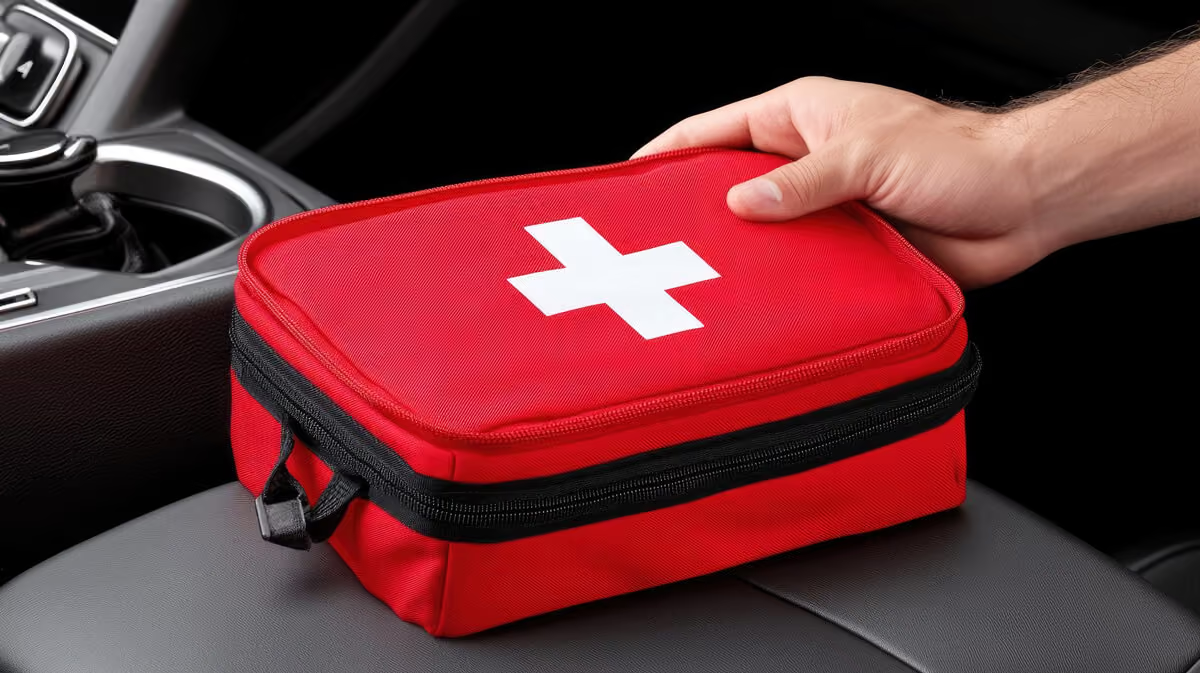
Imagine this: you're driving on a highway somewhere near Tallinn, and an accident happens right in front of you. You stop first. The ambulance is - ten, maybe fifteen minutes away. Those minutes can decide everything. And that's when a simple truth becomes clear. Knowing traffic rules is one thing, but being able to help someone before the medics arrive is something else entirely. Completing a first aid course in Tallinn gives you the confidence to act in those critical minutes.
That's why in Estonia a first aid course for drivers is part of the mandatory driving school program. It's not a formality - it's a skill that can one day save someone's life - possibly your own or someone close to you. Let's break down how this course works, what you'll learn, and what to expect.
Yes. Under Estonian traffic regulations, anyone applying for a driver's license for the first time must complete a first aid course. Without a certificate proving completion, you won't be admitted to the exam and you won't receive the driving school completion document. Along with theory classes, driving practice, night driving and slippery road training, first aid is one of the required parts of the full program. In other words, "first aid + Estonian driver's license" is essentially the same requirement: you need first aid training before you can take the exams.
The good news: you only need to take the course once. The certificate is valid indefinitely for the purpose of obtaining a driver's license, so you don't have to repeat the training later.
The course volume is 16 academic hours. Usually, that means two full training days, though schedules may vary between driving schools: some move part of the theory online, while others hold everything in person. The program and its content are set by official regulations, so the core topics are the same everywhere.
One more important point: the course may only be taught by a certified specialist registered as a healthcare professional. That means you're not being trained by a random person, but by someone who truly knows the subject.
The program covers most real-life situations you might face on the road or in everyday life. In short, you will learn to:
And it's not just theory. A significant part of the course is hands-on practice: you'll perform CPR on a manikin and practice applying bandages and splints yourself. That's why these skills tend to stick - your body remembers better than your notes.
Nothing special is required. Just wear comfortable clothes - during practical exercises you'll need to kneel or sit on the floor next to a manikin, so it's better to leave a formal outfit at home.
The course ends with a knowledge check, and after successful completion each participant receives a certificate. This certificate confirms that you have met the first aid requirement for obtaining a driver's license.
There's also a nice bonus many people don't know about. In many cases, a compliant first aid certificate can also be accepted as proof of workplace first aid training. That means one course can cover two needs at once - for your driver's license and for work. If an employer asks you to confirm first aid skills, your driving school certificate will often be sufficient.
It's easy to treat this course as just another item on the checklist before getting your license. But think about it for a moment: statistically, most drivers will sooner or later witness a road accident. And in that moment, there's often no doctor or rescuer nearby - only ordinary people who either know what to do or stand helplessly by.
A few hours in this first aid course for drivers can move you from the second group to the first. You stop being afraid - and confidence in a critical situation can sometimes matter more than any medication. These skills stay with you beyond the road too: at home, on vacation, on the street, and around children.
At Sky Autokool, the first aid course is part of the full Category B driver training program. If you're looking for a first aid course in Tallinn, our three locations make scheduling and attendance convenient. We run courses in three locations in Tallinn (Mustamäe, Lasnamäe, and City Center) and offer training in three languages - Estonian, Russian, and English - so you can choose the language that feels most comfortable and be confident you've understood everything correctly. With first aid, that matters.
Is the first aid course mandatory for getting a driver's license in Estonia?
Yes. Anyone applying for a driver's license for the first time must complete a 16 academic-hour first aid course - without the certificate you won't be admitted to the exam.
How long does the course take?
16 academic hours - typically two training days with a mandatory practical part.
Do I need to take the course again when opening a new category?
No. For the purpose of getting a driver's license, the certificate is valid indefinitely and does not require renewal.
In what language can I take the course?
At Sky Autokool, training is available in Estonian, Russian, and English.
What should I bring to class?
Wear comfortable clothing. You'll need to get down on the floor next to a manikin, so Sky Autokool recommends casual/sport-style pants.
.avif)